
Primus
Primus is a Swedish-owned company founded in Stockholm back in 1892, when F.W. Lindqvist and J.V. Svenson created the world's first soot-free kerosene stove! Since it was the first, they decided to call it Primus (which means just first). The name became synonymous with reliable outdoor kitchens and open-air kitchens became the first choice for people on their way out on both first-ascents and demanding expeditions. One of the milestones for adventure was when Roald Amundsen became the first man to reach the South Pole in 1911. Another milestone was with Tenzing Norgay and Edmund Hillary on Mount Everest in 1953, when they were the first to reach the summit.
In 1994 Primus started a factory in Tartu, Estonia where the kitchens are still manufactured today. Primus has always strived to offer standard products of the highest quality. To date, Primus remains one of the few outdoor kitchen manufacturers that still manufactures its kitchens in Europe. Every step, from the first design to the production, is done internally at the company's R&D plant, as well as in the field. Each product undergoes extensive testing and intensive quality controls, which means, among other things, that each outdoor kitchen is tested before they leave the factory. We do this to ensure that all outdoor kitchens can truly become a reliable, lifelong companion.
Primus products are intended for all adventures, large and small. Therefore, Primus manufactures products that are not only adapted for the large expeditions, but also for more everyday adventures such as a hike in the forest or a day on the cliffs by the sea.


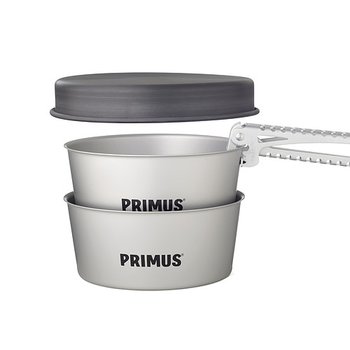
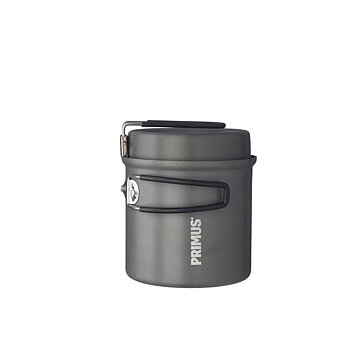


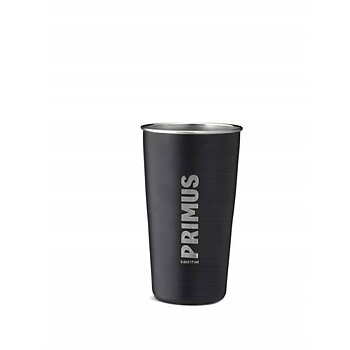

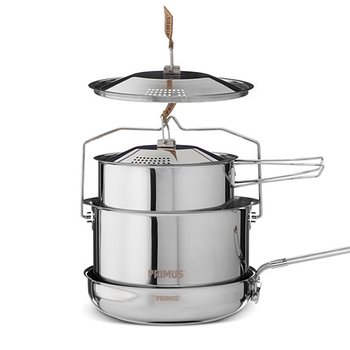
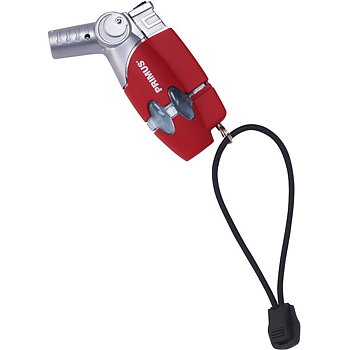
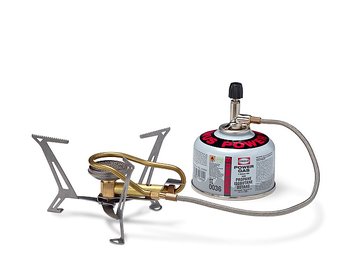






Primus is quality
Primus knows that their products are used under the most extreme conditions and that the equipment must then be reliable. During an expedition where armament can be life-changing, there is no room for defects. Therefore, Primus chooses to reinvest a large part of the profit every year for further development, thus always guaranteeing the latest and most reliable technology.
Sustainability matters to Primus
Quality is sustainability! When the kitchen lasts for both one and two generations, you save on the planet's resources. You can never take shortcuts when a product is going to last for generations and no detail can be left to chance. Therefore, every Primus kitchen passes three pairs of hands before the final assembly is completed. Lanterns as well as expedition and trekking kitchens also go through one last test before leaving the factory. In this way, it is checked that they burn properly and that they do not leak. Should you see brands around the burner on your new kitchen or lantern, it is proof that the kitchen has been tested and serves as our guarantee that it is in perfect condition and ready for years of reliable and safe use.
This is what Primus calls"Exploration Ready" and as proof that your particular expedition or trekking kitchen is tested, the kitchen comes with an Exploration Ready hanging label signed by the person who tested your particular kitchen.
Spare parts for your Primus kitchen
A Primus kitchen can withstand a lot of stress over a lifetime, which is why Primus designs its kitchens so that they can be easily repaired. The majority have interchangeable parts and Primus always stores spare parts even for outgoing products. All so that you can replace worn parts as easily as possible and thus further extend the life of your Primus product.
Prime Tech and fuel-efficient kitchens
During both short and longer expeditions, fuel consumption is a decisive factor. A kitchen that does not take advantage of the energy produced by the burner risks consuming the fuel at too high a rate, which can create major logistical problems during an expedition.
Primus has taken this on board and decided at an early stage to optimize the fuel level, which in an average kitchen is about 40%. Primu's research and development team sat down at the drawing board and created Prime Tech, combining three innovations. With a Prime Tech kitchen from Primus, you get clear benefits such as needing less fuel in the gasket, food heating faster, the environment not affected in the same stretch and of course, more space in your wallet.
The technology behind a Primus Pime Tech kitchen
The secret behind PrimeTech's nearly doubled efficiency compared to regular outdoor kitchens is the pot's built-in heat exchanger that absorbs heat better, an integrated windshield that protects the flame, and a burner optimized for PrimeTech's fuel-efficient pans.
After a survey based on participants' gas consumption during the five-day Fjällräven Classic, it turned out that thanks to the improved efficiency, a 100g Primus gas canister is sufficient for each lunch and dinner, morning coffee (or other hot drink) and afternoon coffee for one person during a five-day hike. Carry half as much gas, produce half as much emissions.
What fuel should you use for your Primus kitchen?
Gas
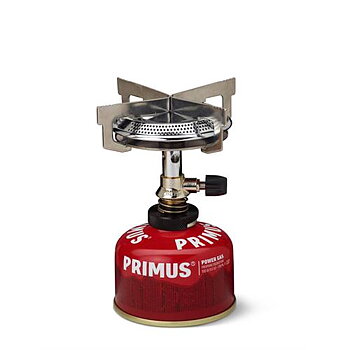
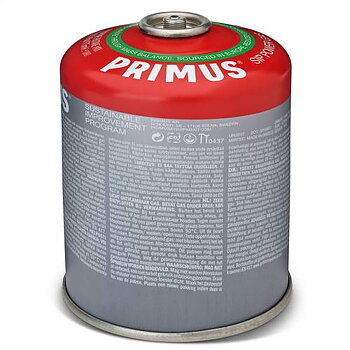
Advantages: Extremely high energy content, that is, weight compared to heat output. The gas in gas cylinders is compressed 250 times its usual volume into liquid form. At extreme altitudes, gas is preferable as combustion works well despite limited oxygen. If we go one step further, the contents of our gas cylinders are an optimal blend for maximum reliability, the widest use and the lowest weight. Our gas mixture consists of propane, isobutane and butane. Gas is a simple and convenient option. No pumping or preheating is needed and the combustion is completely odorless and soot-free. In most countries, you can hand in empty gas canisters where you buy new ones. Empty containers can also be recycled as metal.
Cons: Gas works worse in extreme cold. It is not allowed to bring gas canisters on flights.
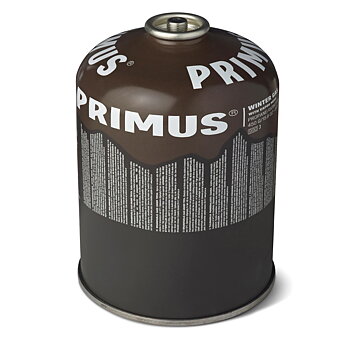
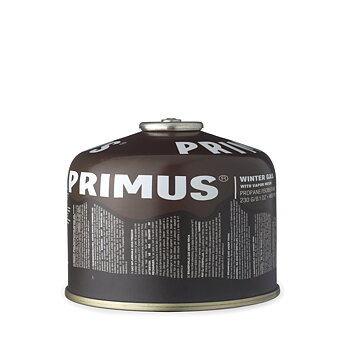
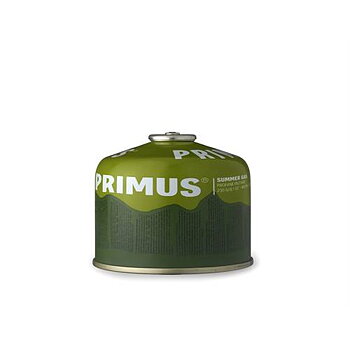
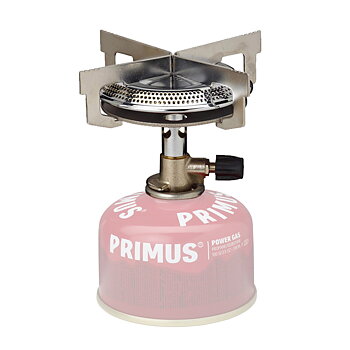
Primus has gas for all seasons and purposes – three different gas mixtures for different conditions: Summer Gas, Power Gas and Winter Gas. This is to optimize energy and efficiency, whenever and wherever it is needed.
Power Gas is Primus' versatile blend that is effective at both plus and minus degrees. Summer Gas is optimized for maximum fuel efficiency during summer hikes and temperatures up to 40° C. For lower temperatures, we have created Winter Gas that works efficiently down to -22° C.
Chemically clean gasoline
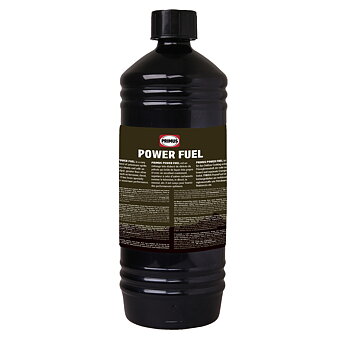
Pros: This type of gasoline is cleaner than regular car gasoline. Often available in the paint shop and outdoor shops. Although car gasoline is easier to obtain, it contains a variety of harmful substances and should only be used if you can't get your hands on chemically clean gasoline (unleaded gasoline is the least harmful of different car fuels). Petrol is the most flammable of all liquid fuels and works excellently in cold conditions.
Cons: Lower energy content compared to our gas cylinders. Always take precautions when handling gasoline, as all types are extremely flammable. Gasoline also requires pumping and preheating.
Kerosene
Advantage: The same energy content as gasoline but in some places more easily accessible.
Cons: Pumping and preheating are required. The fuel is not as clean as gas and chemically clean gasoline. If you use kerosene, you therefore need more maintenance of the kitchen that otherwise sweeps again. Emits odors when burned.
Diesel
Advantage: Has equivalent energy content like kerosene and the availability is very good.
Cons: The quality varies greatly depending on where in the world you are. The maintenance requirement of the kitchen increases further compared to kerosene and, depending on the quality of the diesel, can be very extensive. Strong smell when burning. Diesel is considered an emergency fuel.
Primus Multfuelkök
Primus also has multifue kitchens that work with both gas and liquid fuel. Perfect to take on longer trips where you need to replenish fuel along the way. Gas is not available everywhere, but diesel and other liquid fuels can be found almost everywhere.